Funded Heritage Skills & Community Programmes
StoneMind Education CIC works with funders, charities, community organisations, schools and other partners to create practical heritage craft opportunities for people who might not otherwise have access to them.
Our main focus is people aged 16+, particularly those who are NEET, have SEND or SEMH needs, have experience of the criminal justice system, or face other barriers to education, training and employment.
Programmes are built around real stone carving, masonry and conservation skills. Participants learn through practical projects using professional tools and natural materials, with the chance to build confidence, develop genuine ability and, where possible, progress into further training, qualifications or work.
As a Community Interest Company, our funded work is designed to create lasting benefit for participants while helping traditional craft skills reach a wider group of people.

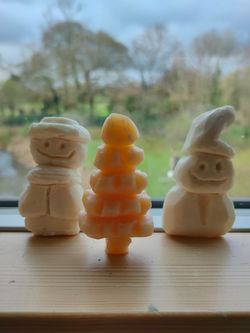
Soap carving

Soap carving is often a good starting point for people who have never carved before.
Participants can experiment with shape, form and detail using a softer material before moving on to harder materials and more traditional tools.
It gives them the chance to learn the basic principles of carving, build hand control and get used to working carefully with a material.
Because progress is visible quite quickly, it can also be a useful way to build confidence at the beginning of a programme.

Free carving
From soap, participants can move on to breezeblock, which gives a more realistic introduction to carving while still being manageable for beginners.
Free carving allows people to explore the material without having to follow a fixed design. They can respond to the shape as it develops, make decisions as they go and gradually learn how to control depth, form and surface.
It is a useful stage between introductory work and more structured stone carving, helping participants become more confident with tools and with making their own decisions.
Heritage carving

As skills develop, participants can move on to more structured projects based on traditional carving and architectural design.
A Tudor rose is one example. Participants begin by setting out the design using geometry, symmetry and proportion, before carving and refining the form using traditional techniques.
Projects like this bring together practical maths, design, history and craft. They also give participants a clearer sense of the level of accuracy and patience involved in professional stone carving and heritage work.
Progression
Our programmes are designed so that skills build naturally over time.
Participants can move from simple introductory projects into more demanding carving, masonry and conservation work, developing better tool control, accuracy, measurement, planning and problem-solving as they go.
For some, this may simply mean discovering a practical skill they enjoy and are good at. For others, it can become a route into further training, qualifications, apprenticeships, heritage crafts, construction or employment.
Where we are able to build programmes around live restoration or heritage projects, participants can also gain experience of working towards a real brief, contributing to work with a lasting purpose and seeing how the skills they are learning are used outside the workshop.
Testimonials

Sessions were always well planned, well structured, calm and safely managed. I observed strong engagement from students and genuine excitement. Sessions were pitched at the right level and adapted to student's ability. Tom's passion and expertise inspired learners and enabled them to try a new experience. I would confidently recommend Stonemind Education as a suitable provision for SEN schools.
Head of Design & Technology, Sussex SEND/SEMH school
 |  |  |  |
|---|---|---|---|
 |  |  |  |
 |  |  |  |